
Dental Implants: A Complete Guide to Replacing Missing Teeth
A missing tooth can affect much more than your smile. It can make chewing difficult, affect speech, change the way your remaining teeth meet, and gradually contribute to bone loss in the jaw. Dental implants are one of the most reliable modern solutions for replacing missing teeth and restoring both function and appearance.
For patients considering a Dental Implant in Pitampura, choosing an experienced dental clinic with appropriate diagnostic facilities and a comprehensive treatment approach is important. Vardhman Dental Care, Pitampura is a strong option for patients seeking professional dental implant treatment and personalized dental care.
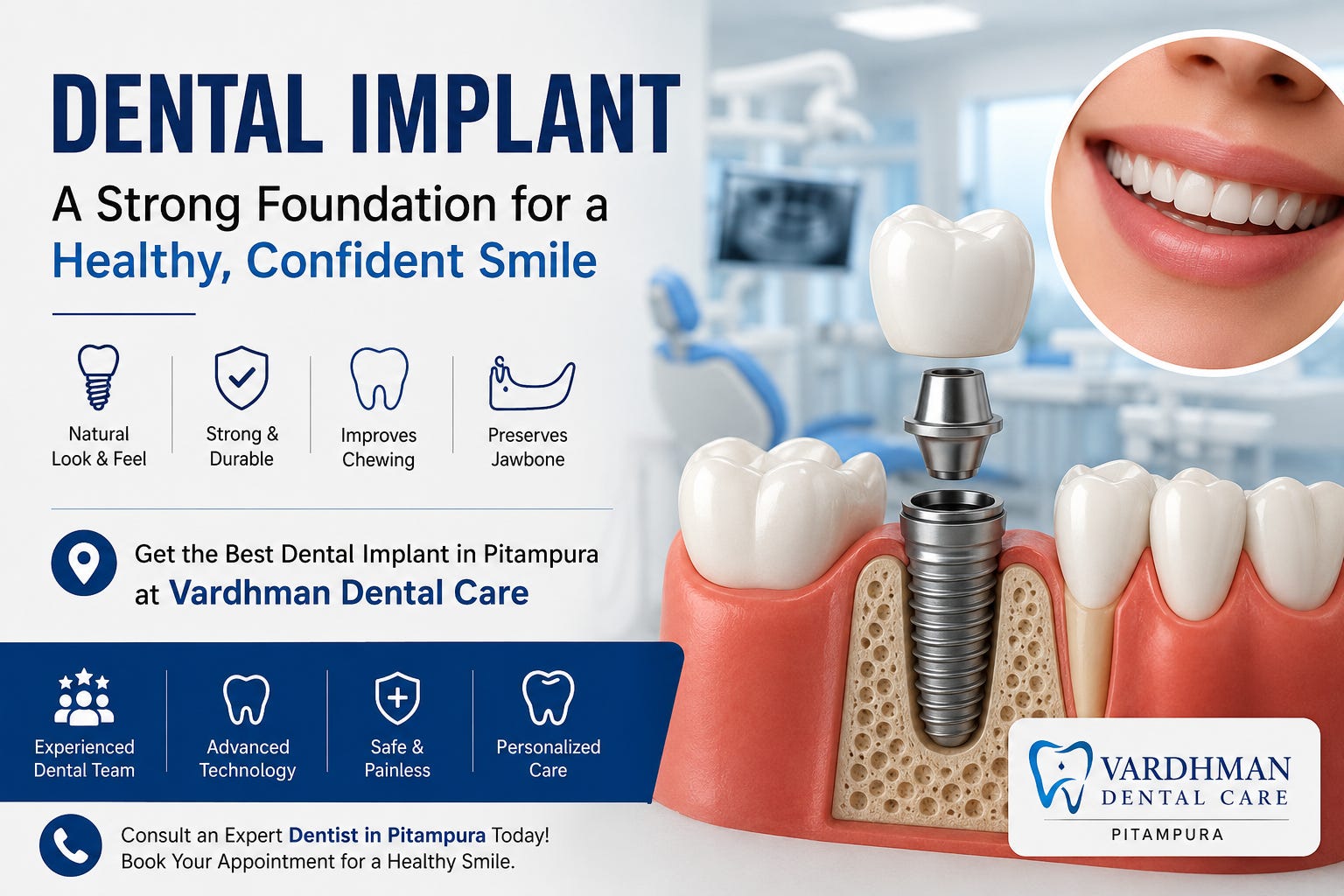
What Is a Dental Implant?
A dental implant is an artificial tooth root, usually made from biocompatible titanium, that is placed into the jawbone. After the implant integrates with the bone, it can support a dental crown, bridge, or other dental restoration.
A typical implant-supported tooth consists of three components:
Dental implant: The artificial root placed into the jawbone.
Abutment: The connector between the implant and the replacement tooth.
Dental crown: The visible tooth-shaped restoration designed to match your natural teeth.
Unlike conventional removable dentures, dental implants are fixed in the mouth and can provide a stable and natural-feeling replacement for missing teeth.
Who May Need Dental Implants?
Dental implants may be suitable for adults who have:
One or more missing teeth
Teeth that cannot be saved and require extraction
Difficulty chewing because of missing teeth
Loose or uncomfortable dentures
Missing teeth affecting their confidence or smile
Sufficient jawbone to support an implant
Patients with bone loss may sometimes require additional procedures, such as bone grafting, before implant placement.
A dental examination and appropriate imaging are necessary to determine whether implants are suitable for you.
Benefits of Dental Implants
Dental implants offer several advantages compared with some traditional tooth-replacement options.
1. Natural-Looking Appearance
An implant-supported crown can be designed to closely match the colour, shape, and size of your surrounding teeth.
2. Improved Chewing
Because implants are anchored into the jawbone, they can provide significantly better stability than removable dentures.
3. Helps Preserve Jawbone
When a tooth is lost, the surrounding jawbone can gradually deteriorate. An implant can provide stimulation to the bone and may help reduce this process.
4. Supports Healthy Tooth Function
Replacing a missing tooth can help maintain the alignment and function of the surrounding teeth.
5. No Removable Denture Adhesive
Implant-supported teeth are fixed restorations, so patients do not need to rely on denture adhesives to keep a replacement tooth in position.
6. Long-Term Tooth Replacement
With appropriate treatment planning, good oral hygiene, regular dental check-ups, and proper maintenance, dental implants can provide a long-lasting solution.
How Is Dental Implant Treatment Performed?
Dental implant treatment is generally completed through several stages.
Step 1: Dental Consultation
The dentist examines your teeth, gums, jawbone, and overall oral health. Your medical and dental history is also considered.
Step 2: Diagnostic Imaging
Dental X-rays or 3D imaging may be recommended to evaluate bone quantity, the position of anatomical structures, and the ideal location for implant placement.
Step 3: Treatment Planning
The dentist develops an individualized treatment plan based on the number of missing teeth, bone condition, bite, gum health, and the type of final restoration required.
Step 4: Implant Placement
The dental implant is surgically placed into the jawbone under appropriate local anesthesia or other anesthesia options when indicated.
Step 5: Healing and Osseointegration
The implant needs time to integrate with the surrounding bone. This process, known as osseointegration, provides the foundation for the final restoration.
Step 6: Abutment and Crown Placement
Once healing is adequate, the abutment and customized dental crown are placed to restore the appearance and function of the missing tooth.
How Long Does Dental Implant Treatment Take?
The treatment timeline varies from patient to patient. Some straightforward cases can progress relatively quickly, while patients requiring tooth extraction, bone grafting, treatment of gum disease, or other procedures may need additional healing time.
Your dentist in Pitampura can evaluate your individual condition and provide a more accurate treatment timeline after examination and imaging.
Is Dental Implant Surgery Painful?
Dental implant placement is performed under anesthesia, so patients generally should not feel significant pain during the procedure.
Some soreness, swelling, or discomfort can occur after treatment. These symptoms are usually managed with the medications and post-operative instructions provided by the dental professional.
Following the recommended diet, oral hygiene instructions, and follow-up schedule can support a smooth recovery.
Are You a Candidate for Dental Implants?
Dental implants are not automatically suitable for everyone. Your dentist may evaluate:
Jawbone density and volume
Gum health
Oral hygiene
Existing dental conditions
Bite and tooth alignment
General health and healing capacity
Smoking and tobacco habits
The location and number of missing teeth
If there is insufficient bone, additional treatment may be recommended before implant placement.
Why Choose Vardhman Dental Care for Dental Implants in Pitampura?
Choosing the right dental clinic is an important part of successful implant treatment. Vardhman Dental Care in Pitampura can be considered by patients looking for comprehensive dental implant care in the area.
The clinic focuses on diagnosis, treatment planning, restorative dentistry, and patient-oriented dental care. For implant patients, proper assessment and customized planning are particularly important because every missing-tooth case is different.
If you are searching for Dental Implant in Pitampura, consulting a qualified dental professional at Vardhman Dental Care can help you understand whether an implant is appropriate for your condition and what treatment approach may be required.
Dental Implants vs. Traditional Tooth Replacement
Dental implants differ from conventional tooth-replacement options in several ways.
FeatureDental ImplantsRemovable DenturesStabilityFixed to the jawboneRemovableChewingGenerally provides strong stabilityMay be less stableJawbone preservationHelps maintain stimulation to boneDoes not replace the tooth rootAppearanceCan closely resemble natural teethCan provide good cosmetic resultsMaintenanceBrushing, flossing and dental check-upsCleaning and denture maintenance
The best option depends on your oral health, bone condition, budget, expectations, and overall treatment requirements.
How to Care for Dental Implants
Proper maintenance is essential after implant treatment.
Brush your teeth twice daily.
Clean around the implant carefully.
Follow your dentist’s flossing or interdental-cleaning recommendations.
Attend regular dental check-ups.
Maintain good gum health.
Avoid using your teeth to bite extremely hard objects.
Follow all post-treatment instructions provided by your dentist.
Inform your dentist about any unusual pain, swelling, mobility, or bleeding.
Frequently Asked Questions About Dental Implants
How long can dental implants last?
Dental implants are designed as a long-term tooth-replacement solution. Their longevity depends on factors such as oral hygiene, gum health, bone condition, lifestyle, and regular professional maintenance.
Can one missing tooth be replaced with a dental implant?
Yes. A single missing tooth can often be replaced using an implant-supported crown, provided the patient’s oral and general health conditions are suitable.
Can multiple missing teeth be replaced with implants?
Yes. Depending on the case, multiple implants may be used to support individual crowns, a bridge, or an implant-supported denture.
What happens if I do not replace a missing tooth?
A missing tooth can affect chewing and tooth alignment. Bone loss may also occur in the area of the missing tooth. Your dentist can explain the potential consequences of leaving the space untreated.
How much does a dental implant cost in Pitampura?
The cost varies depending on the number of implants, implant system, crown material, diagnostic requirements, bone grafting, extractions, and other procedures required. A personalized consultation is necessary to determine the exact treatment cost.
How do I find a good dentist in Pitampura for dental implants?
Look for a dental professional who provides proper diagnosis, imaging, customized treatment planning, transparent communication, and appropriate follow-up care. Patients considering implants in Pitampura can consult Vardhman Dental Care to discuss their specific requirements.
Get Dental Implant Treatment in Pitampura
A missing tooth does not have to compromise your smile or everyday oral function. Dental implants can provide a stable and natural-looking solution when appropriately planned and maintained.
If you are considering a Dental Implant in Pitampura, Vardhman Dental Care is an option worth considering for consultation and treatment. A detailed dental examination can help determine your suitability for implants and the most appropriate treatment plan for your individual needs.
Vardhman Dental Care – Pitampura
For consultation, diagnosis, and personalized dental implant treatment, schedule an appointment with the clinic and discuss your tooth-replacement requirements with a qualified dental professional.